Why Is the Gulf Climate So Hard on Oriental Sweets?
The Gulf climate is hard on sweets because it combines two opposite extremes: crushing humid heat outdoors — 40–45°C with 60–90% humidity in summer — and dry, air-conditioned cold indoors, around 20–24°C. Every crossing between the two stresses a pastry.
The most destructive mechanism is condensation. Carry a box of baklava from an air-conditioned room onto a Dubai balcony in August: within seconds, the moisture-saturated air deposits a fine film of water on the cold pastry, exactly as it does on an iced glass. The result: crisp layers turn limp and the sugared surface goes sticky.
Direct heat is the other enemy. A car parked in the sun reaches 60–70°C in a Gulf summer: ten minutes is enough to melt the clarified butter out of a shortbread, ferment soft dates or turn pistachios rancid. The drive home from the shops is the single riskiest moment in a pastry's life.
Finally, ambient humidity works around the clock: dry cookies absorb water from the air and soften, while sugar-rich products actively attract moisture through hygroscopy. The good news: with airtight containers and a few simple habits — detailed in the sections that follow — every family of sweets keeps perfectly, even in mid-August in Abu Dhabi.
How Long Do Baklava and Syrup Pastries Last, and How Should You Store Them?
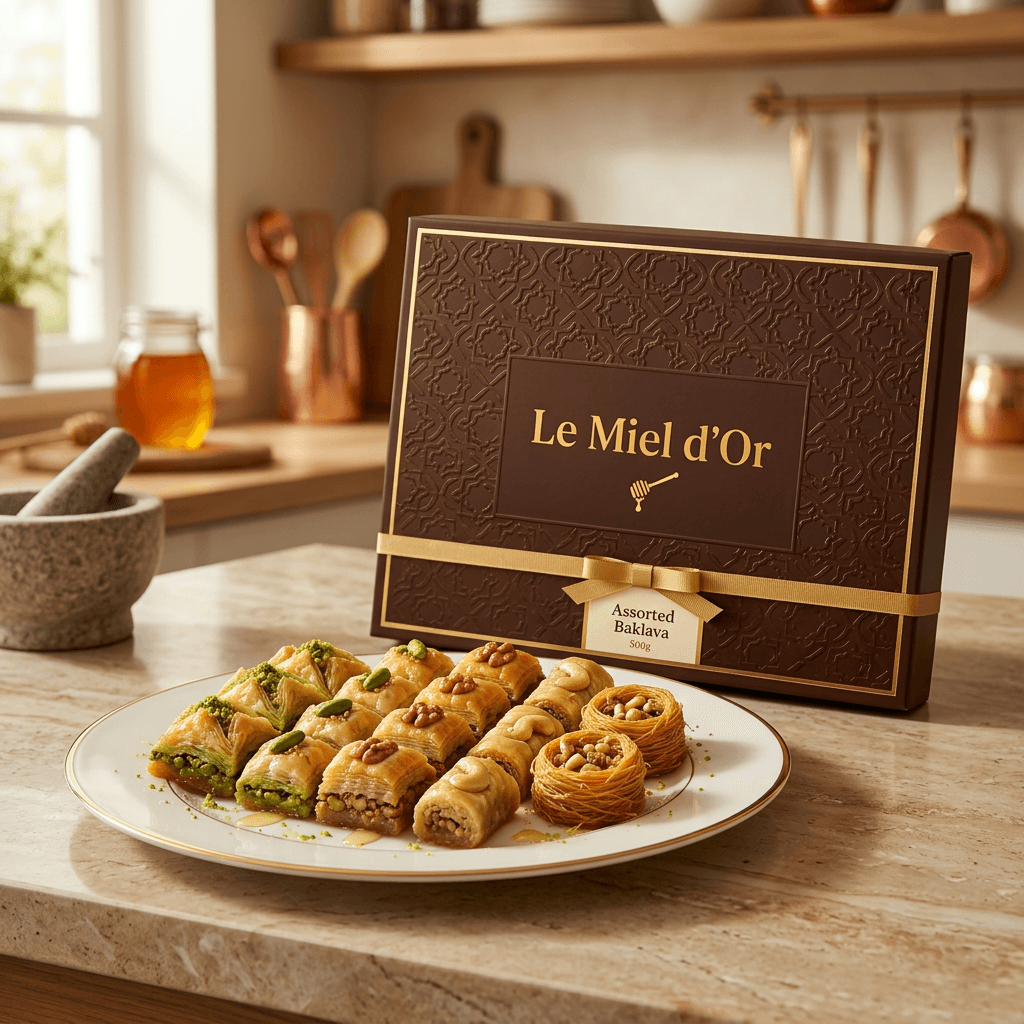
In their sealed pack, our syrup pastries keep from 18 days (makroudh) to 30 days (baklava); each product page gives the exact figure. At home, keep them in an airtight box in a cool, dry place away from the sun: air-conditioned room temperature (20–24°C) is where baklava tastes best.
The rule applies to the whole family of syrup pastries: Turkish or Algerian baklava, makrout, samsa. Three conditions, however:
- A rigid airtight box, in a single layer or with layers separated by baking paper — never cling film pressed directly onto the pastry;
- Away from light and heat sources: not on the worktop next to the oven, nor behind a sun-facing window;
- Never in a non-air-conditioned room in summer — above 28°C the syrup weeps and the layers soon go soft.
The fridge prolongs freshness, which helps in the Gulf summer. Keep the pastries in their closed box so they take on neither moisture nor odours, and take pieces out 30 to 60 minutes before serving so they return to room temperature.
The freezer is an excellent ally: well wrapped (airtight box plus film), baklava freezes for up to 6 months. Thaw it gradually in the fridge, still in the closed box — never in the microwave, whose steam destroys the crunch. A short oven refresh, covered in the final section, then brings back its crispness.
How Should You Store Dry Cookies, Dates and Nuts?
Remember three rules: dry cookies stay at room temperature, dates and nuts stay sealed and away from heat, and every pack carries its own keeping time — from 30 days for our maamoul to 180 days for our Ajwa dates.
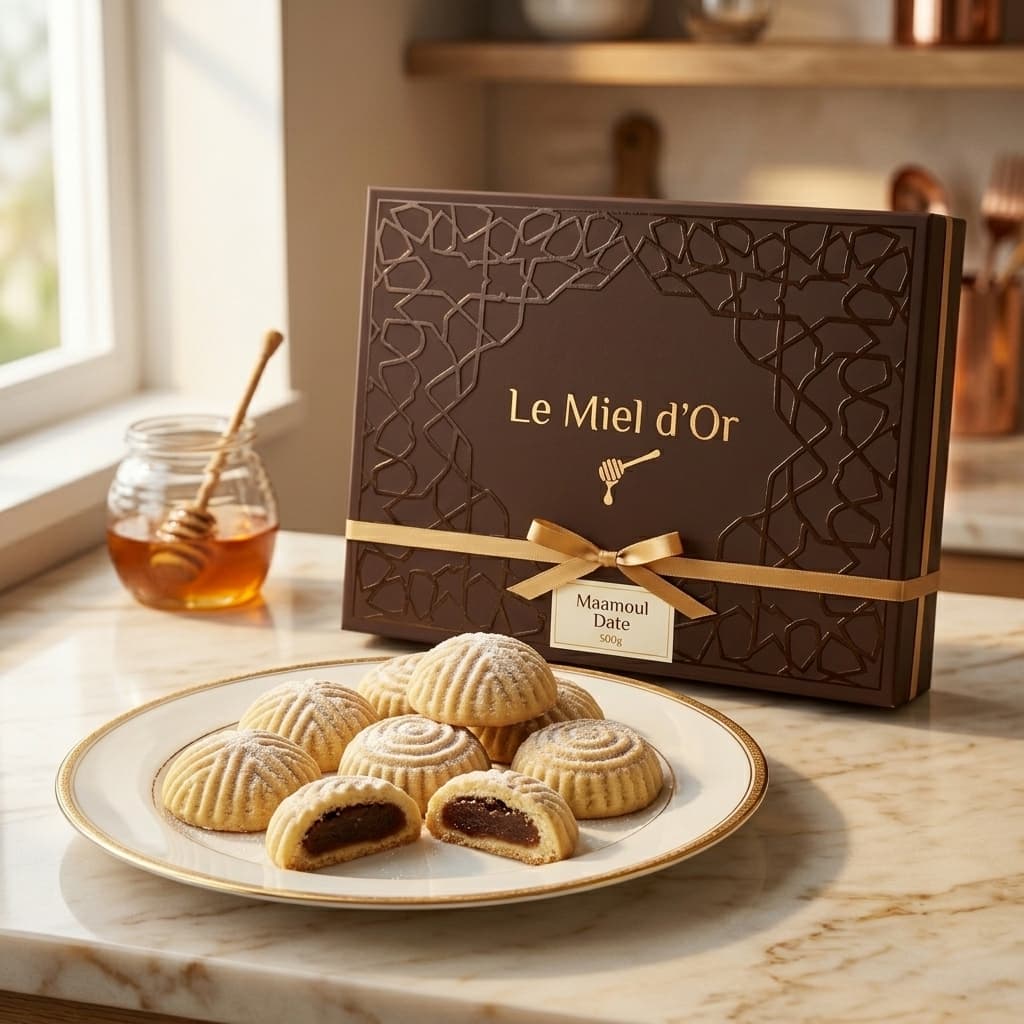
Dry cookies — maamoul, ghraybeh, barazek, ghriba — are built to last, provided they stay dry: in their sealed pack, our maamoul keeps up to 30 days, almond ghriba 35 days, ghraybeh and barazek 45 days. Once opened, a metal tin with a snug lid is ideal, at room temperature and away from heat and humidity; they need no fridge. Add a food-grade desiccant sachet if your kitchen runs humid. Never mix dry cookies and moist pastries in the same tin: the moisture from one softens the other within 24 hours.
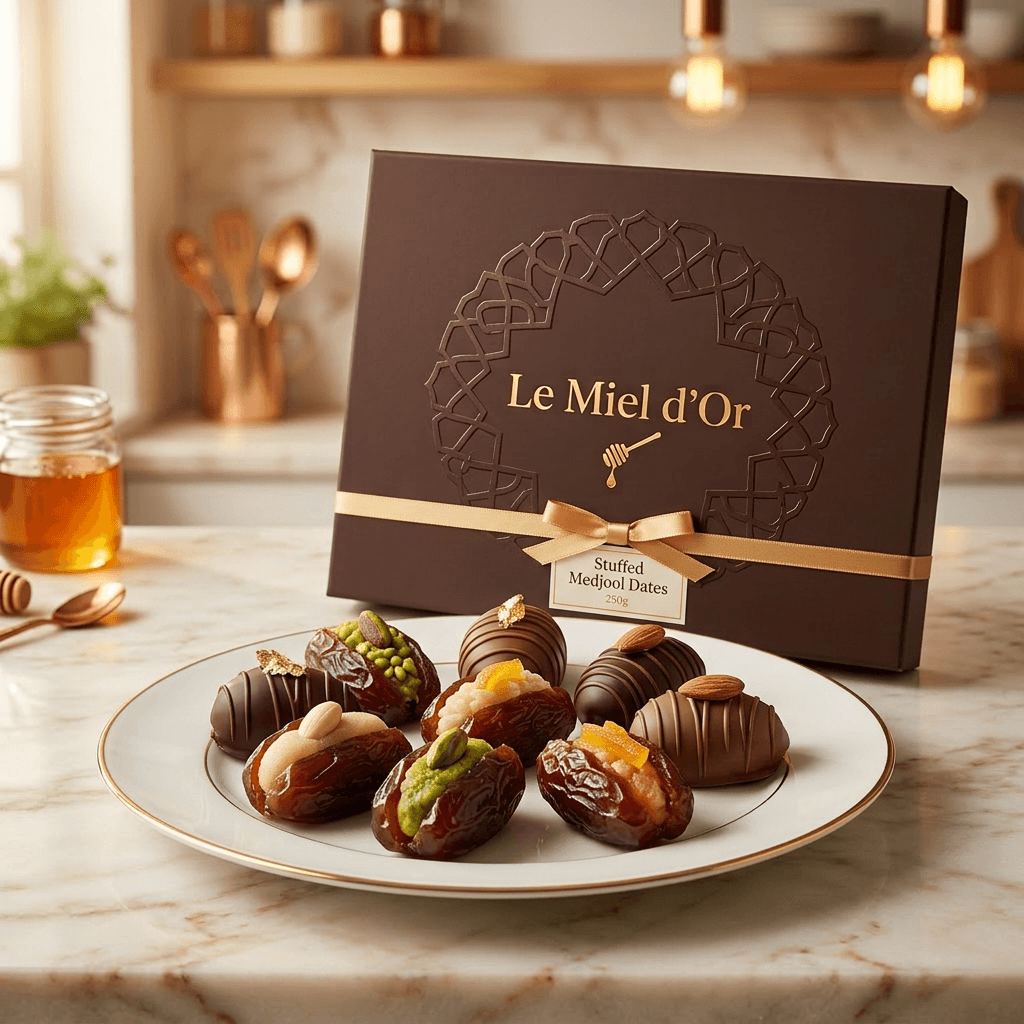
Dates are more forgiving but not invulnerable. In their sealed pack, our Ajwa dates keep up to 180 days and our stuffed Medjool dates up to 60 days; reseal tightly after each opening and keep them away from humidity and direct sunlight. Loose, very moist dates such as fresh Sukkari ferment quickly in heat and keep better in the fridge in summer.
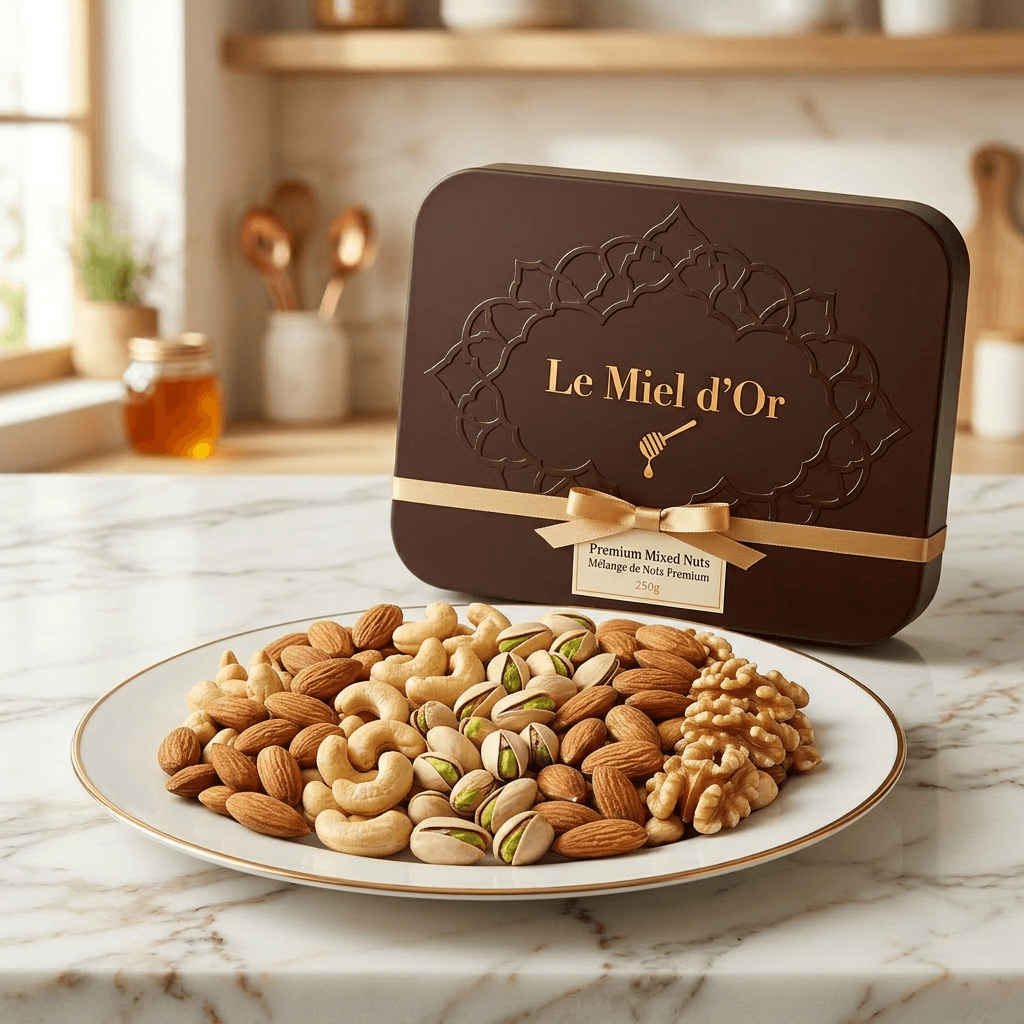
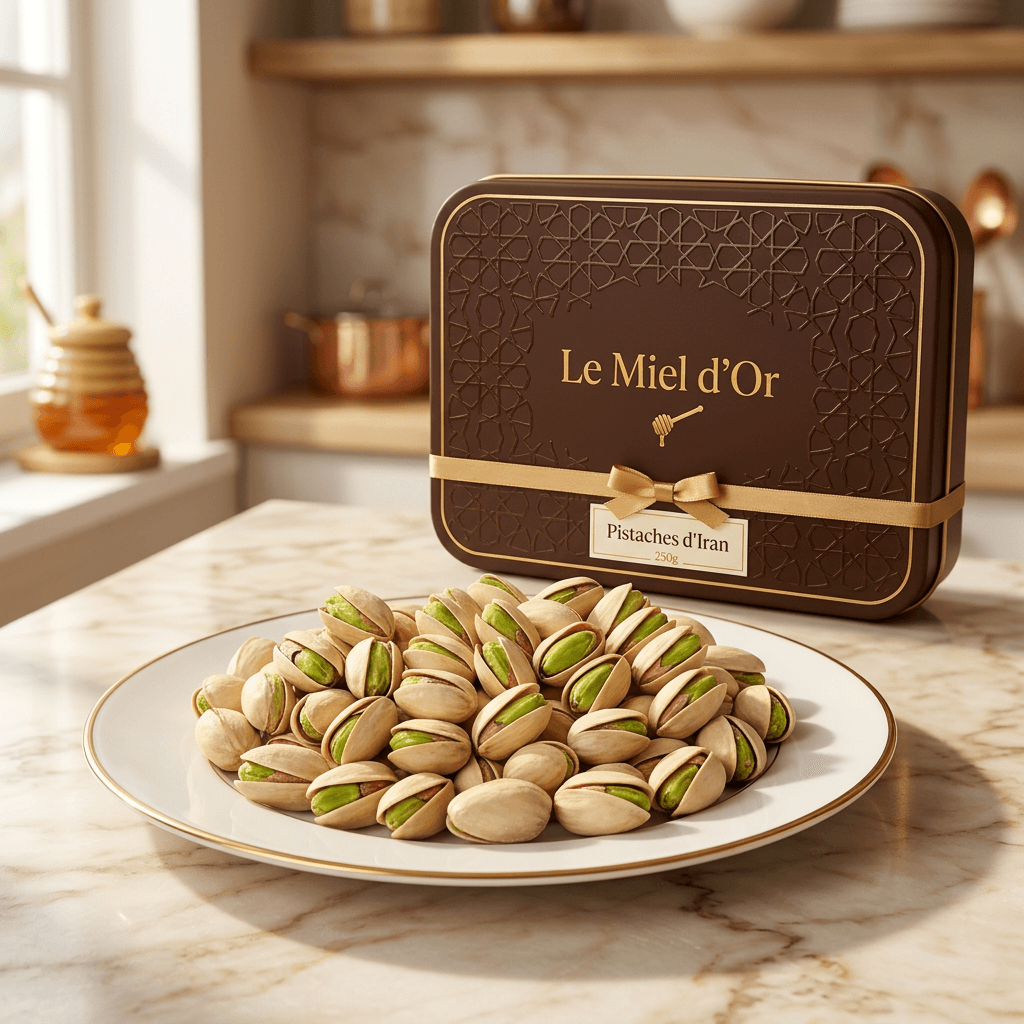
Nuts are the most fragile over the long run: their oils turn rancid under the combined effect of heat, light and oxygen. In their sealed pack, our mixed nuts keep up to 120 days and our Iranian pistachios up to 150 days; once opened, move them to an opaque airtight jar away from heat and light. Shelled pistachios and walnuts, richer in unsaturated oils, go first — taste before serving: any sharp bitterness signals rancidity.
Fridge, Room Temperature or Freezer: Which Is Right for Each Sweet?
The decision rule fits in one sentence: dry cookies stay at room temperature, syrup pastries stay in a cool, dry place with the fridge as an option, and the freezer serves as the long-term reserve.
Air-conditioned room temperature (20–24°C) — the default:
- Baklava and syrup pastries: 18 to 30 days in the sealed pack, depending on the product
- Maamoul, ghraybeh, barazek: 30 to 45 days in the sealed pack
- Ajwa dates: up to 180 days in the sealed pack
- Nuts: 120 to 150 days in the sealed pack
- Halva and nougats: 50 to 180 days in the sealed pack depending on the product, away from heat
Fridge (4°C) — for the moist and the fragile:
- Baklava and syrup pastries, to prolong freshness: let them come back to room temperature before serving
- Loose, very moist dates (fresh Sukkari) in summer
- Cream- or cheese-based sweets (filled kunafa, karabij): 2–3 days maximum — these are the only truly perishable ones.
Freezer (−18°C) — the strategic reserve:
- Baklava and syrup pastries: up to 6 months, thawed gradually in the fridge
- Maamoul, ghraybeh, barazek: up to 6 months
Two imperatives for cold storage: containers that are genuinely airtight (the fridge both dries food out and transfers odours — baklava shelved next to a spiced dish will remember it), and slow thawing inside the closed packaging, so condensation forms on the box rather than on the pastry. That one detail separates perfectly thawed baklava from a soggy disappointment.
How Do You Revive Baklava — and What Mistakes Should You Avoid?
To revive softened baklava, warm it for 5 to 8 minutes in a 120–150°C oven on a baking tray, then let it cool completely before serving: the gentle heat drives out absorbed moisture, restoring most of the original crispness.
Three details make the operation succeed: a preheated oven, pieces spaced out on baking paper, and above all complete cooling — baklava straight from the oven feels soft; the layers re-crisp as they cool. Never use the microwave, which generates steam and makes the problem permanent.
The five mistakes that ruin sweets in the Gulf climate:
- Leaving purchases in the car — at a cabin temperature of 60–70°C, ten minutes is all it takes. Make pastries your last errand and drive straight home;
- The knotted plastic bag — it traps condensation at every temperature swing; always transfer sweets to a rigid airtight box;
- Refrigerating dry cookies — maamoul, ghraybeh and barazek need no fridge, which only dries them out; baklava can go in the fridge to prolong freshness, but always comes back to room temperature before serving;
- Mixing families — soft and crisp in the same tin, or sweets next to spices and onions: moisture and odours migrate within a day;
- Serving straight from the cold outdoors — always let sweets return to room temperature in their closed box before exposing them to humid air.
These habits keep your sweets at their best down to the very last piece.
Frequently Asked Questions
How long does baklava last unrefrigerated in Dubai?
In its sealed pack, our baklava keeps up to 30 days (25 days for Algerian baklava), stored in a cool, dry place away from the sun — an air-conditioned room at 20–24°C is ideal, and the fridge prolongs freshness. In a non-air-conditioned room above 28°C, however, the syrup weeps and the texture quickly degrades, so keep it in the coolest room of the house.
Can you freeze baklava?
Yes — baklava freezes very well for up to 6 months in an airtight box wrapped in film. Thaw it gradually in the fridge inside the closed packaging, so condensation forms on the box rather than on the pastry, then let it come back to room temperature. A 5-to-8-minute refresh in a 120–150°C oven, followed by complete cooling, then restores its crispness.
Should dates be kept in the fridge in the UAE?
Check the pack first: in their sealed pack, our Ajwa dates keep up to 180 days and our stuffed Medjool dates up to 60 days, away from humidity and direct sunlight; reseal tightly after each opening. Loose, very soft dates such as fresh Sukkari are different: in summer, the fridge slows the fermentation that heat triggers.
Why did my baklava go soggy?
Two causes dominate: condensation — cold baklava exposed to humid Gulf air films over with water within seconds — and storage in a plastic bag or an unsealed container in the fridge, where moisture softens the layers. The fix: 5 to 8 minutes in a 120–150°C oven, then complete cooling before serving, which drives the moisture back out.
How long does a box of maamoul keep?
Our maamoul keeps up to 30 days in its sealed pack, whatever the filling. Once opened, keep it in an airtight metal tin at room temperature, away from heat and humidity. It also freezes very well for up to 6 months. It needs no fridge, which dries out the crumbly semolina dough.