What Makes Ajwa, Medjool and Sukkari the World's Most Prized Dates?
Ajwa, Medjool and Sukkari are the three most sought-after date varieties in the world because each combines a unique growing region, centuries of history and a taste profile no other variety replicates. Out of more than 600 cultivated date varieties, these three dominate the Gulf's premium market.
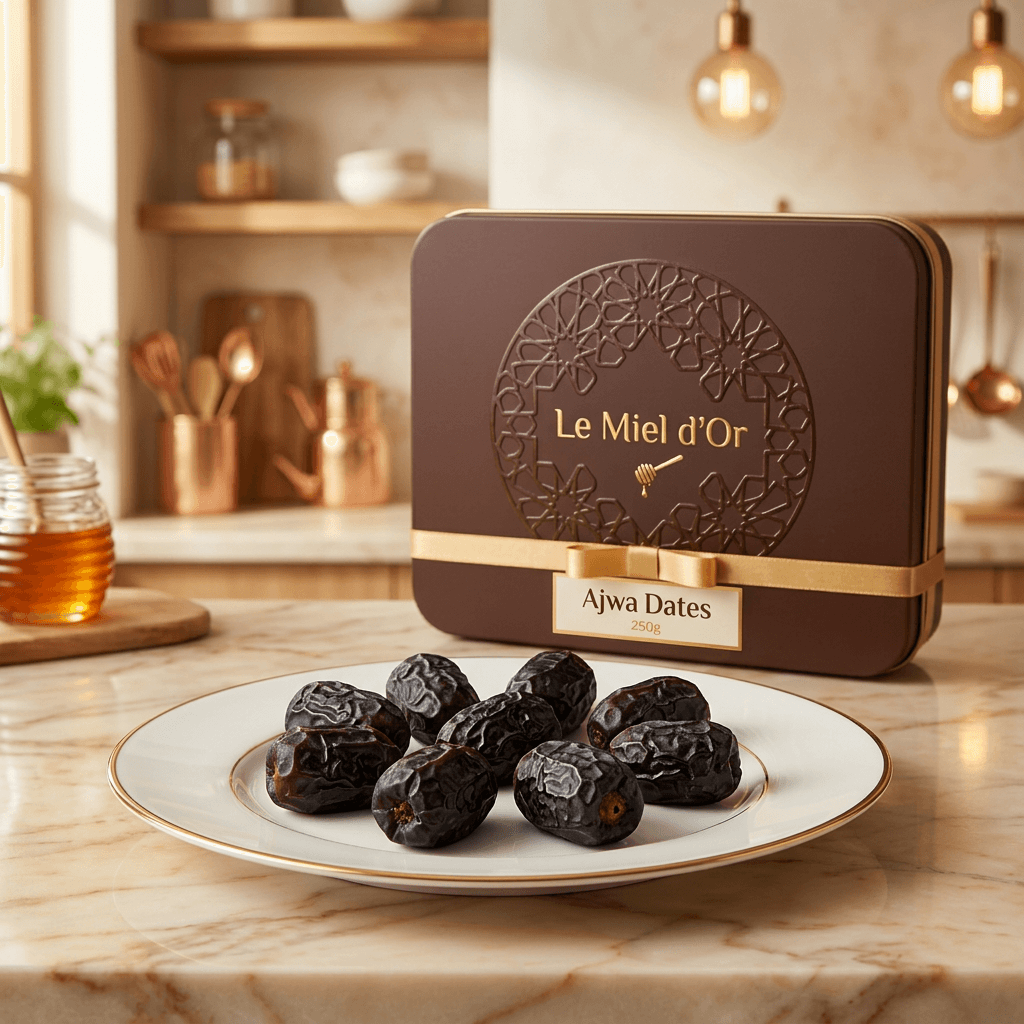
Ajwa grows almost exclusively in the palm groves of Madinah, Saudi Arabia. Its production, confined to a single holy city, and its place in prophetic tradition make it the most revered date in the Islamic world.
Medjool originates from the Tafilalet valley in Morocco, where it was once reserved for royal households — hence its nickname, "the queen of dates." Today it is cultivated in Jordan, Palestine (Jericho Medjools are especially prized), California and Saudi Arabia.
Sukkari — literally "sugary" in Arabic — comes from the Al-Qassim region in central Saudi Arabia. It is the everyday favourite of Saudi and Emirati households, loved for its golden, melting flesh.
In the UAE, where dates accompany every gesture of hospitality — from the welcome coffee to Ramadan gift boxes — knowing these three varieties means mastering the essentials of date culture.
How Do Ajwa, Medjool and Sukkari Differ in Taste and Texture?
In short: Ajwa is small, dark and mildly sweet with prune and cinnamon notes; Medjool is large, soft and caramel-rich; Sukkari is golden, crisp-then-melting and the sweetest of the three.
Ajwa always surprises at first taste. Small (7–10 g per fruit), nearly black, with finely wrinkled skin, it offers dense, relatively dry flesh and restrained sugar. Its profile recalls prunes, raisins and a hint of cinnamon — a bittersweet elegance that wins over people who find other dates cloying.
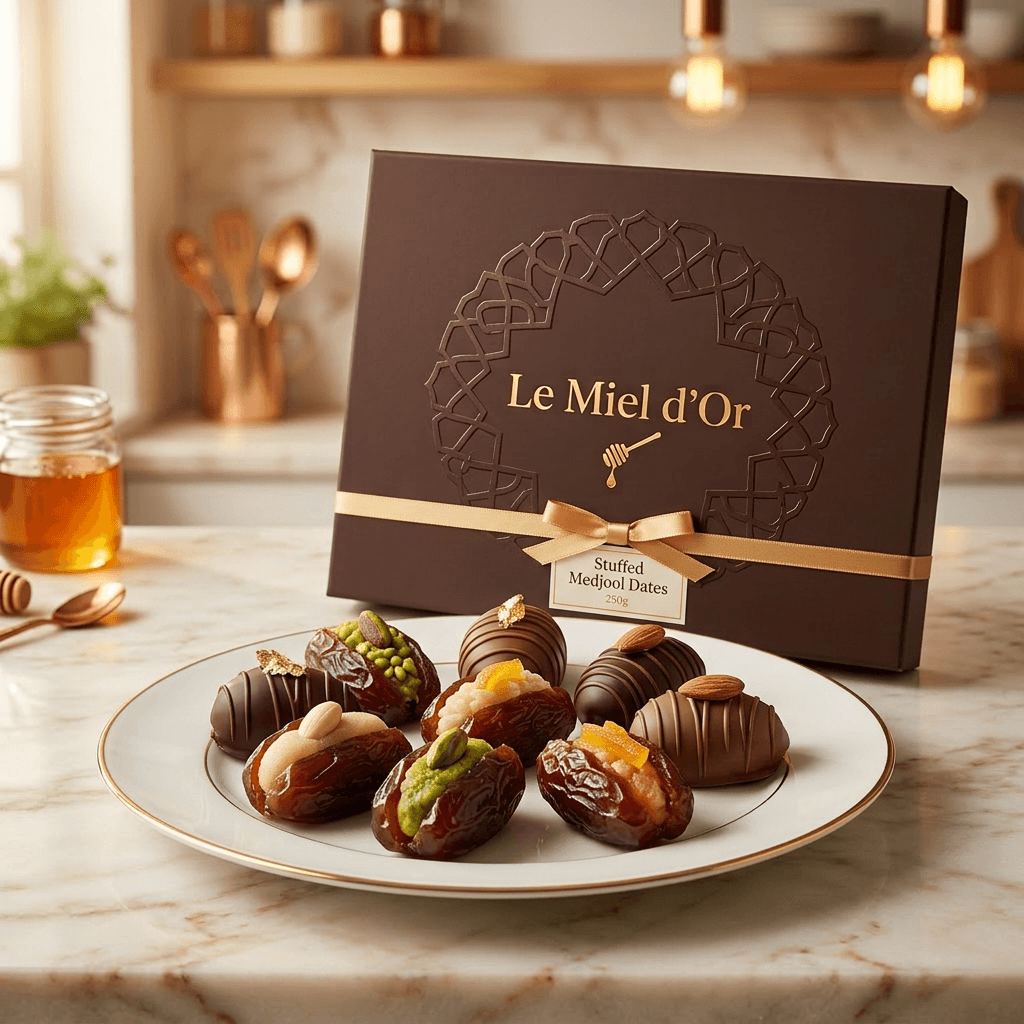
Medjool is the deliberate opposite: an imposing fruit of 20–30 g, with thick, moist, fibrous flesh saturated with caramel, honey and maple syrup flavours. It is the fleshiest date on the market, which is why it takes so well to being stuffed with almonds or pistachio paste.
Sukkari has a texture all its own: when fresh, its golden flesh is faintly crisp at the surface, then literally melts on the tongue with a sweetness of honey and brown sugar. It is the sweetest of the three — its sugar content often exceeds 75% of dry weight.
- Ajwa: small, dark, mildly sweet, prune-like notes
- Medjool: large, soft, intense caramel
- Sukkari: golden, crisp-then-melting, very sweet
There is no "best" of the three — only the right date for the right moment, as the final section of this guide explains.
Why Are Ajwa Dates Religiously Significant?
Ajwa dates are religiously significant because they are directly mentioned in the hadiths of the Prophet Muhammad ﷺ, who is said to have planted them himself in Madinah. No other date variety holds such a distinction in Islamic tradition.
The most famous hadith, narrated in both Sahih al-Bukhari and Sahih Muslim, states:
"He who eats seven Ajwa dates in the morning will not be harmed by poison or magic on that day."
This saying has shaped habits that remain alive today: in many Gulf households, the day begins with Ajwa dates — often exactly seven — taken with water or milk. During Ramadan, breaking the fast with dates follows the prophetic example, and Ajwa is considered the noblest choice for iftar.
This spiritual dimension also explains Ajwa's value as a gift: presenting Ajwa from Madinah means offering far more than a dried fruit — it is a gesture of respect and blessing. Pilgrims returning from Umrah or Hajj traditionally bring it home for their loved ones.
One note of caution: this aura makes Ajwa the most counterfeited date on the market. Similar dark varieties (such as Safawi) are sometimes sold as Ajwa. Genuine Madinah Ajwa can be recognised by its small size, its fine, regular wrinkles and its restrained sweetness — if a "cheap Ajwa" tastes sugary and looks large and glossy, be sceptical.
What Drives the Price of These Dates, and How Do You Spot Quality?
Of the three, Madinah Ajwa is the most expensive, Medjool sits in the middle (jumbo grades cost noticeably more) and Sukkari is the most affordable. Within each variety, price follows fruit size, harvest freshness and the sales channel.
Ajwa commands the highest price because its production zone is tiny — the palm groves of Madinah cannot expand — while global demand is driven by its spiritual significance. Jumbo Medjool from Jericho or California also fetches a premium: hand-grading and high moisture content make it costly to transport.
How to recognise a quality date, whatever the variety:
- The skin: intact, with no tears or excessive lifting. Fine wrinkles are normal; skin peeling away in flakes signals a dried-out fruit.
- Crystallisation: grainy white spots under the skin mean the sugars have crystallised — the date is old or was poorly stored.
- The smell: a fresh date smells of honey and dried fruit. Any sour or fermented note is disqualifying.
- The texture: the flesh should yield under your finger without being hard or mushy.
- No infestation: check around the pit cavity, the classic hiding place for pantry moths in low-grade dates.
A simple rule of thumb for shopping in Dubai or Abu Dhabi: if loose dates are displayed unrefrigerated, unsealed and in direct sunlight, walk away — the Gulf heat degrades them within days.
Which Dates Should You Choose for Gifting, Daily Eating or Ramadan?
The simple rule: gift Ajwa or stuffed Medjool, eat Sukkari daily, and break your Ramadan fast with Ajwa or Sukkari depending on how sweet you like it.
For gifting: Madinah Ajwa is the most meaningful gift for a Muslim recipient — a 500 g box conveys respect better than almost any other edible present. For cross-cultural gifting, typical of the UAE where colleagues and neighbours come from everywhere, stuffed Medjool (almonds, candied orange peel, pistachio paste) is more universal: spectacular, indulgent and requiring no cultural context. Plan on 300–500 g per household.
For daily eating: Sukkari offers the best pleasure-to-price ratio. Two or three dates (about 40–60 g) with coffee or as a snack make an easy daily habit, at home or at the office. Its reasonable price means you can enjoy it freely.
For Ramadan: tradition favours Ajwa for iftar, eaten in odd numbers following the sunnah. Those who prefer a sweeter date after a day of fasting choose Sukkari. For large iftar gatherings, a mixed platter of all three varieties never fails to impress.
Ajwa dates and stuffed Medjool dates are both in our selection — because in the Gulf, the right date at the right moment is a language of its own.
Frequently Asked Questions
Is Medjool sweeter than Ajwa?
Yes. Ajwa is small, dark and only mildly sweet, with prune and cinnamon notes, while Medjool is large, moist and caramel-rich. If you find dates cloying, start with Ajwa; for a rich, indulgent bite, or for stuffing, choose Medjool.
Why are Ajwa dates so expensive?
Ajwa dates are expensive because they grow almost exclusively in Madinah, Saudi Arabia, on land that cannot be expanded. Global demand, driven by their mention in prophetic hadiths, far exceeds supply. Harvesting and grading remain largely manual, which adds further cost. Their scarcity also makes them the most counterfeited date, so buy from trusted sellers.
How many dates are usually served per person?
Three to five dates per person is the usual serving at the coffee table, often in odd numbers following tradition. A Medjool weighs 20–30 g versus 7–10 g for an Ajwa, so adjust the count to the variety.
Do dates need to be refrigerated in Dubai?
Check the pack first: our Ajwa dates keep up to 180 days and our stuffed Medjool dates up to 60 days in their sealed pack, away from humidity and direct sunlight; reseal tightly after each opening. Loose, very moist dates such as fresh Sukkari keep better in the fridge in summer. Never leave dates in a car or by a window: Gulf heat can ferment high-moisture dates within days.
What are the best dates for breaking the fast in Ramadan?
Ajwa is the choice most faithful to prophetic tradition for iftar, eaten in odd numbers. Any variety honours the custom. Sukkari, very sweet and melting, is especially popular at iftar tables, while a mixed platter of Ajwa, Medjool and Sukkari satisfies every guest at a large gathering.