A Shared Heritage, a Thousand Interpretations
Baklava is arguably the most widely travelled pastry in the Mediterranean world. Born in the imperial kitchens of the Ottoman Empire, it spread across a realm that stretched from North Africa to the Levant, from the Balkans to the Caucasus. But far from remaining frozen in its original form, baklava has been reinvented in every region, absorbing local ingredients, regional tastes, and the expertise of generations of artisans.
Today, ordering a platter of baklava in Istanbul, Algiers, or Beirut means discovering three distinct worlds. The same name conceals radically different realities in taste, texture, and presentation. Understanding these differences is key to appreciating the richness of a culinary heritage that millions of families carry forward with pride.
In the UAE, where these traditions converge in souks and patisseries alike, every variation can be tasted side by side.
The Pastry: Phyllo versus Dioul
The most fundamental difference between baklavas lies in the pastry itself. Turkish baklava uses phyllo (yufka), stretched into sheets so thin they become translucent. A master Turkish pastry chef layers between 30 and 40 sheets, each brushed with clarified butter, creating a structure of airy lightness that shatters at the slightest touch.
Algerian baklava, by contrast, relies on dioul — pastry sheets that are notably thicker and flakier. The result is a more robust texture, crispy on the surface yet tender at the core. Where the Turkish version is an exercise in near-surgical finesse, the Algerian version plays on the contrast between generous flaky layers and the sweetness of the syrup.
Lebanese baklava sits somewhere between the two, using thin phyllo but in more numerous layers, often soaked in a particularly fragrant clarified butter (samné). The result is a pastry that is both crispy and rich, with a distinct depth of buttery flavour.
These three approaches to pastry reflect different culinary philosophies: Turkish precision, Algerian generosity, and Levantine opulence.
The Nuts: Pistachio, Almond, or Walnut
If pastry is the body of baklava, the nut filling is its soul. And it is here that traditions diverge most sharply.
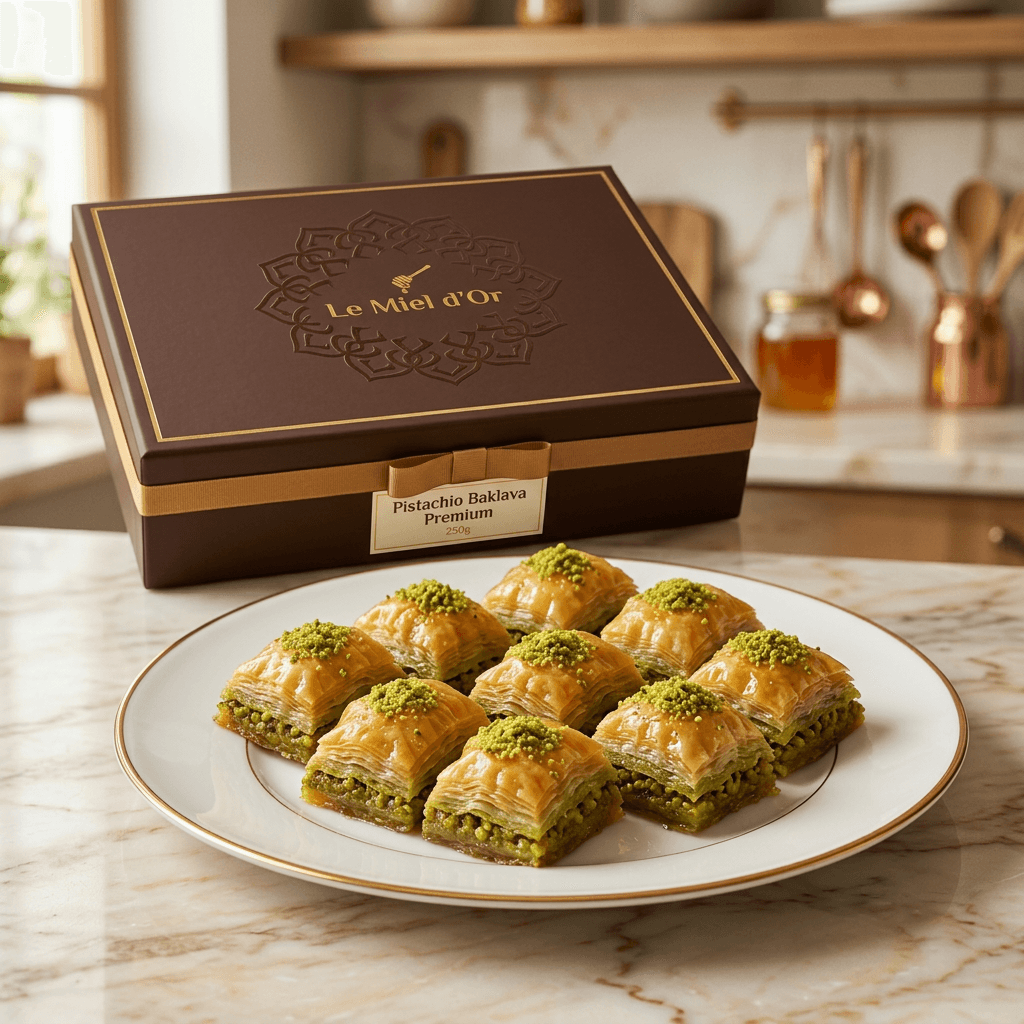
Turkish baklava from Gaziantep — widely considered the gold standard — is inseparable from the pistachio. The Gaziantep region in southeastern Turkey produces pistachios of an intense green colour and unmatched flavour. They are finely chopped and distributed in generous layers between sheets of phyllo. Some Turkish varieties, like "fıstıklı baklava," contain up to 50% pistachios by weight.
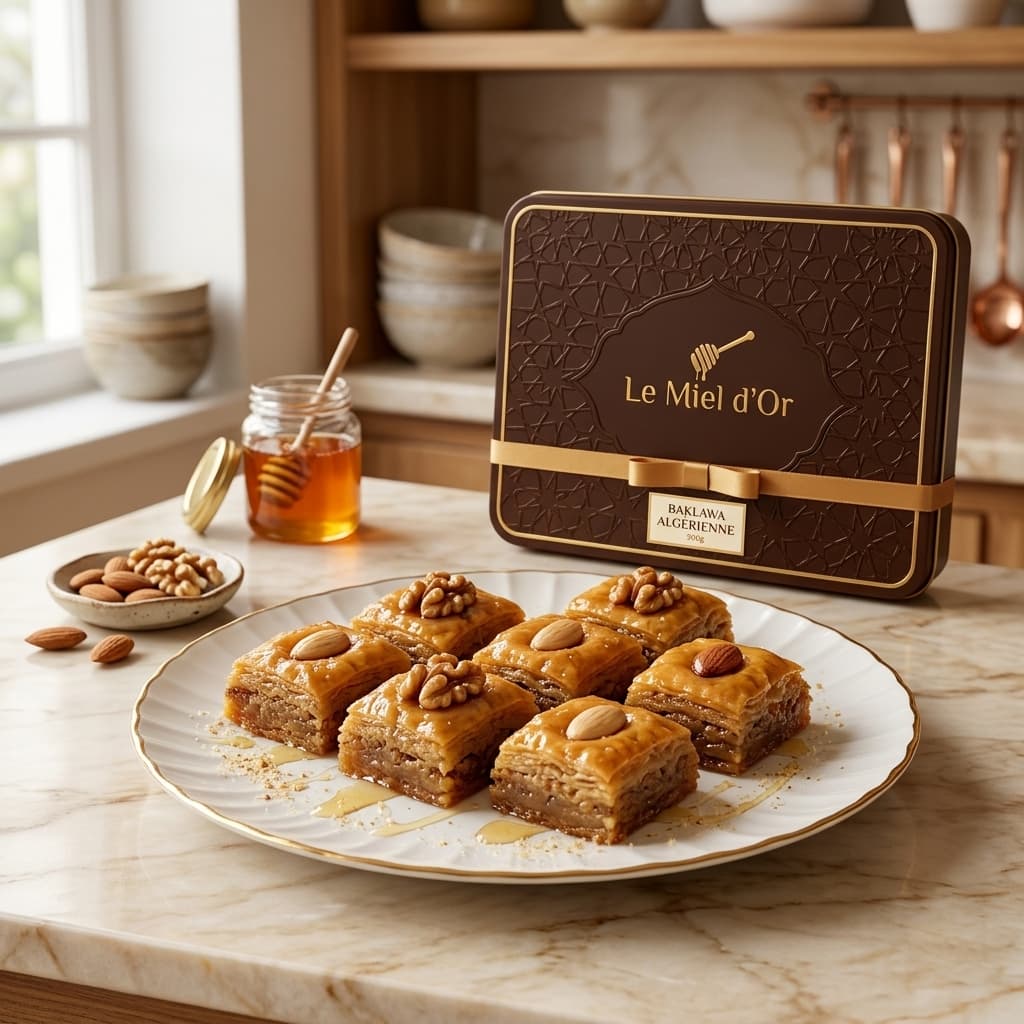
Algerian baklava favours the almond, sometimes blended with cashews or hazelnuts. The almonds are roughly crushed — never powdered — to preserve that characteristic crunch. In the Tlemcen region, walnuts are traditionally used, adding an earthier, more intense dimension.
Lebanese baklava plays on versatility: pistachios, cashews, and mixed nuts are all common. The Syrian version, meanwhile, is often dominated by walnut, creating a more bitter and complex profile.
- Turkish: finely chopped pistachios, vibrant green and delicate profile
- Algerian: roughly crushed almonds, sometimes walnuts, sweet and crunchy profile
- Lebanese/Syrian: varied mix, often walnut or cashew, rich and complex profile
The Syrup: Honey, Sugar, and Rose Water
The syrup is the binding element that unites pastry and filling, and it is often what defines the final character of a baklava.
The Turkish tradition uses a simple sugar syrup (şerbet), flavoured with lemon and sometimes rose water. The key is restraint: the syrup is poured cold over hot baklava (unlike the Algerian method), allowing for more controlled absorption. The result is a pastry that is sweet but never cloying, where the pistachio flavour remains dominant.
In Algeria, the syrup is typically a blend of sugar and honey, perfumed with orange blossom water — a signature ingredient of Maghrebi pastry. The syrup is poured hot over hot baklava, creating a thermal shock that forces deep penetration. This method yields a more saturated, melt-in-your-mouth baklava with pronounced floral aromas.
The Lebanese baklava stands out for its generous use of rose water and orange blossom water in the syrup, creating an intense floral fragrance. Some traditional Lebanese recipes incorporate pure honey, a nod to the most ancient origins of this pastry.
Each approach to syrup tells the story of a terroir: Turkish citrus groves, Maghrebi orange blossoms, and the roses of Lebanon's Bekaa Valley.
The Art of Shape: Diamonds, Squares, and Rolls
The shape in which baklava is cut is not merely aesthetic — it influences the ratio of pastry to filling, and therefore the experience on the palate.
Classic Turkish baklava is cut into diamonds (baklava kesimi), a precise geometric pattern that maximises the number of pieces per tray. Varieties like "burma" are rolled into tight cylinders around pistachio filling, creating spectacular green spirals. "Şöbiyet," meanwhile, takes the form of cream-filled puffed triangles.
Algerian baklava traditionally adopts a square or diamond cut, but in more generous portions than its Turkish counterparts. Each piece is a small monument of golden flaky pastry, often crowned with a whole almond or half walnut as decoration.
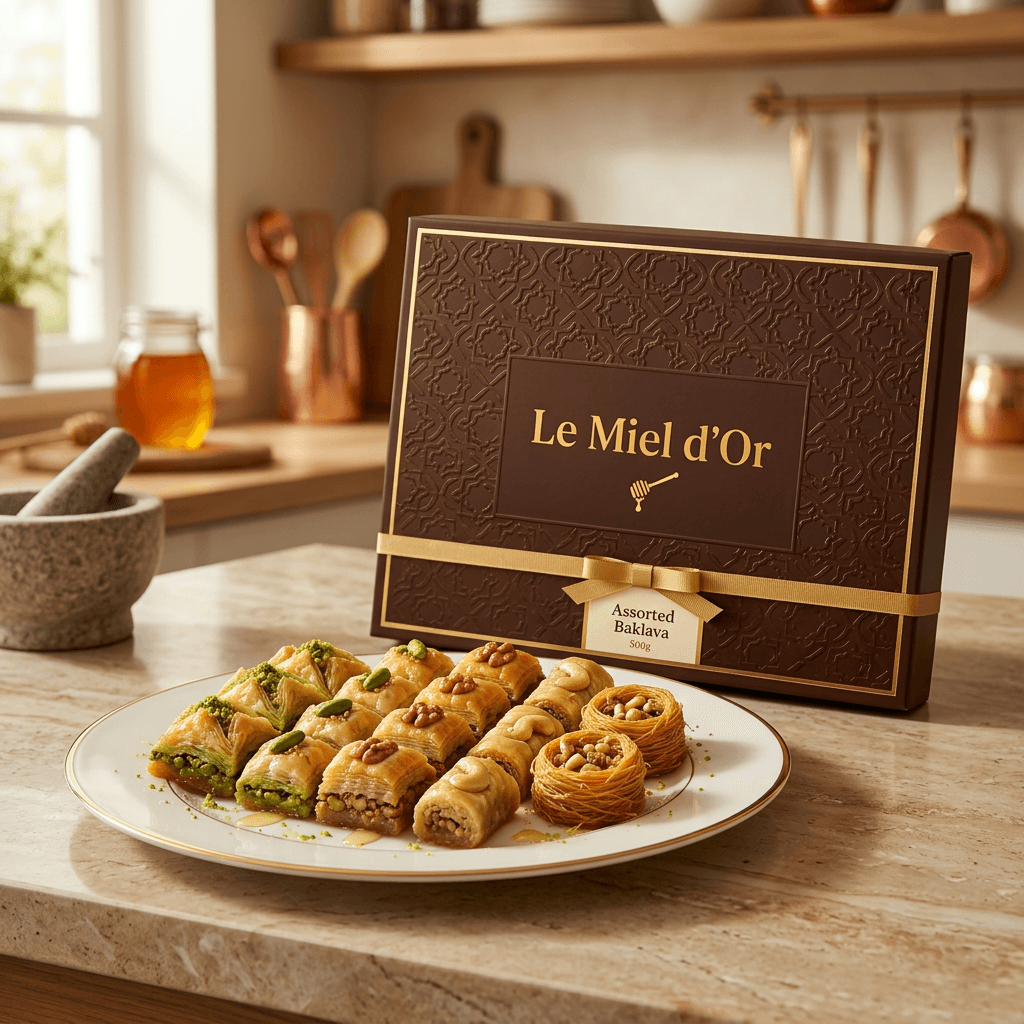
Lebanese baklava explores a wider range of shapes: "fingers" (asabi) are thin, crispy rolls; "bird's nest" (ush el-bulbul) is coiled into circular nests topped with pistachios; and "karabij" are small filled domes. This diversity of shapes transforms a Lebanese platter into a genuine visual spectacle.
Our assorted baklava brings several of these shapes together on one tray: pistachio diamonds, walnut rolls and cashew fingers.
Frequently Asked Questions
What is the difference between Turkish and Lebanese baklava?
Turkish baklava layers 30 to 40 ultra-thin phyllo sheets around a pistachio-dominant filling, with a lemon-scented sugar syrup poured cold. Lebanese baklava uses slightly thicker layers, a mix of walnut, cashew and pistachio, and a syrup perfumed with rose and orange blossom water. Turkish is crisper and more delicate; Lebanese is richer and more floral.
Which country makes the best baklava?
There is no single answer: each tradition optimises for something different. Gaziantep in Turkey holds a protected geographical indication and remains the global benchmark for pistachio baklava. The Algerian version is thicker and honey-drenched, the Lebanese the most floral. "Best" ultimately depends on the texture you prefer.
Why is pistachio baklava more expensive than walnut baklava?
Pistachios cost roughly three to four times more per kilo than walnuts, and a premium baklava is 30–50% nuts by weight. Antep and Iranian pistachios also require hand-sorting to guarantee an even green colour. Walnut and cashew versions deliver the same craftsmanship at a noticeably lower price.
How many calories are in one piece of baklava?
A standard 30–40 gram piece contains roughly 140 to 200 calories, depending on the nut type and how much syrup it absorbed. Most of that comes from the fat in the pastry and the sugar syrup; each product page lists the nutrition per 100 g. Two or three pieces with unsweetened tea or coffee make a typical serving.
Is baklava Turkish, Greek, or Arab?
Its modern layered form was perfected in the Ottoman imperial kitchens of Topkapı Palace, but its ancestors trace back to Central Asian and Mesopotamian layered pastries. It spread across the entire Ottoman Empire, so Turkish, Greek, Levantine and North African claims are all genuine branches of one shared heritage.