How Do You Serve Gahwa with Dates the Traditional Way?
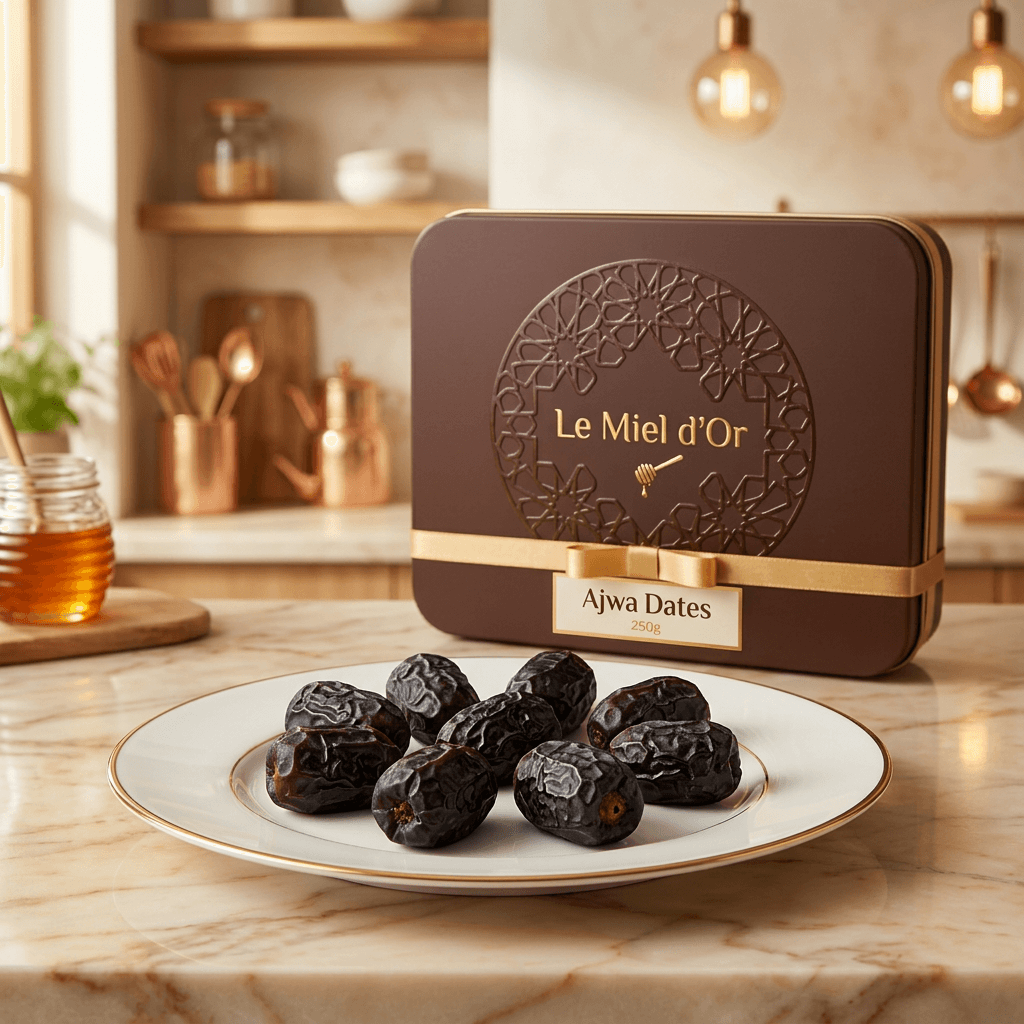
Tradition dictates that gahwa — the pale, cardamom-laced Arabic coffee — is poured from the dallah into small handleless cups (finjan) filled only a third of the way, and always served with dates: the coffee's bitterness and the fruit's sweetness form the founding pairing of Gulf hospitality.
Gahwa stands apart from every other coffee: the beans are only lightly roasted, yielding a clear, golden, unsweetened brew dominated by cardamom and often lifted with saffron, cloves or rose water. Served scalding, it is bitter, herbal, almost medicinal — which is precisely why the date is indispensable: a bite of Sukkari or Ajwa before the sip turns bitterness into depth.
Etiquette matters as much as taste:
- Coffee is served and received with the right hand;
- The cup is filled only a quarter to a third — a full cup would signal the host wishes to cut the visit short;
- Refills continue as long as the guest extends the cup; to say "enough," you gently shake the cup with a flick of the wrist;
- Three cups is the polite custom: the first for the host, the second for pleasure, the third for honour.
For the pairing itself, choose soft, sweet dates (Sukkari, Medjool) or almond-stuffed dates: their richness coats the palate and sets up the next sip. It is the Gulf's oldest pairing — and still its truest.
What Sweets Pair Best with Karak Chai?
Karak pairs best with lightly sweetened, textured treats — sesame cookies, butter shortbread, walnut maamoul — because this milky tea is already sweet and spiced: adding a syrup-soaked pastry would saturate the palate.
Karak chai is the popular heartbeat of the UAE: strong black tea boiled with evaporated milk, cardamom and sugar, sometimes saffron or ginger. Sold for 1–5 AED at neighbourhood cafeterias, it is drunk at every hour, from building site to office tower. Its creamy texture and built-in sugar make it a demanding partner: the goal is not to compete with it, but to contrast it.
Pairings that work:
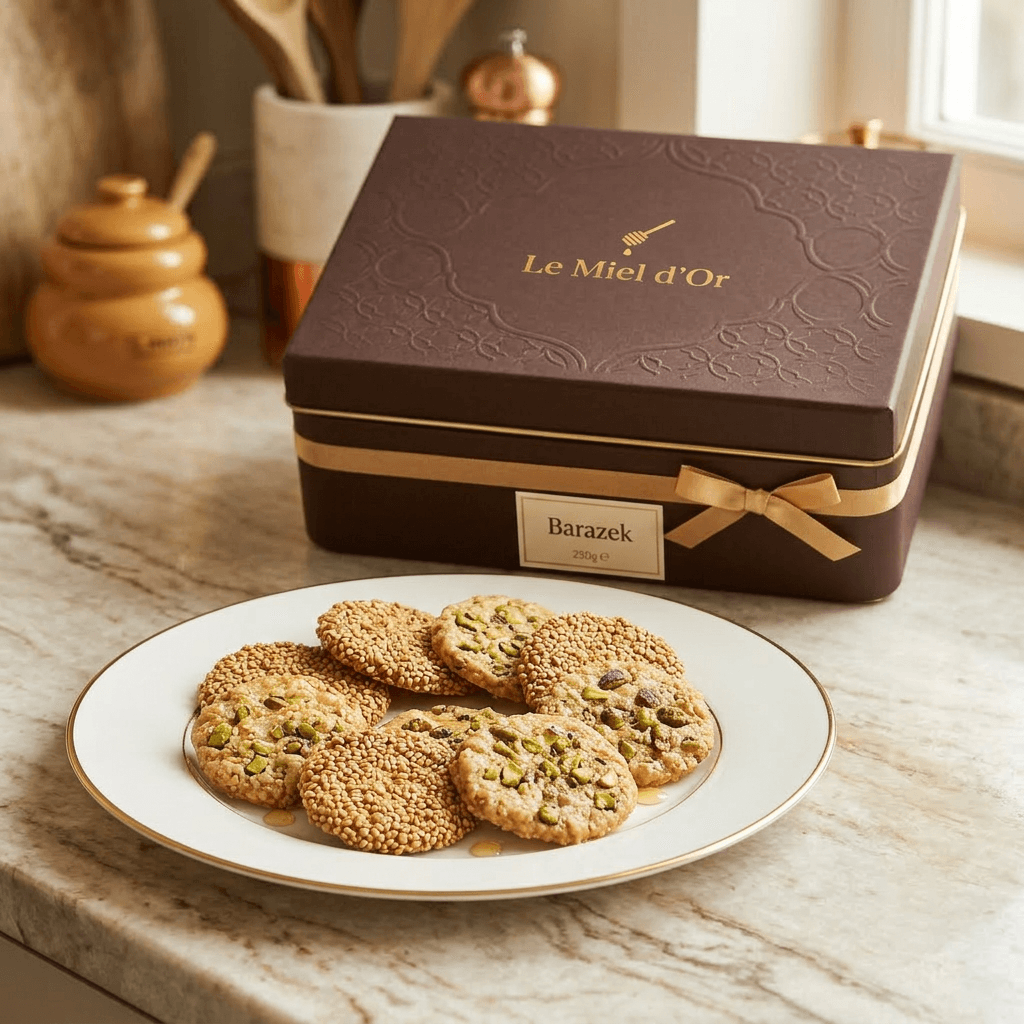
- Barazek — thin, crackling Syrian sesame-and-pistachio cookies bring a toasted note that answers the cardamom without piling on sugar;
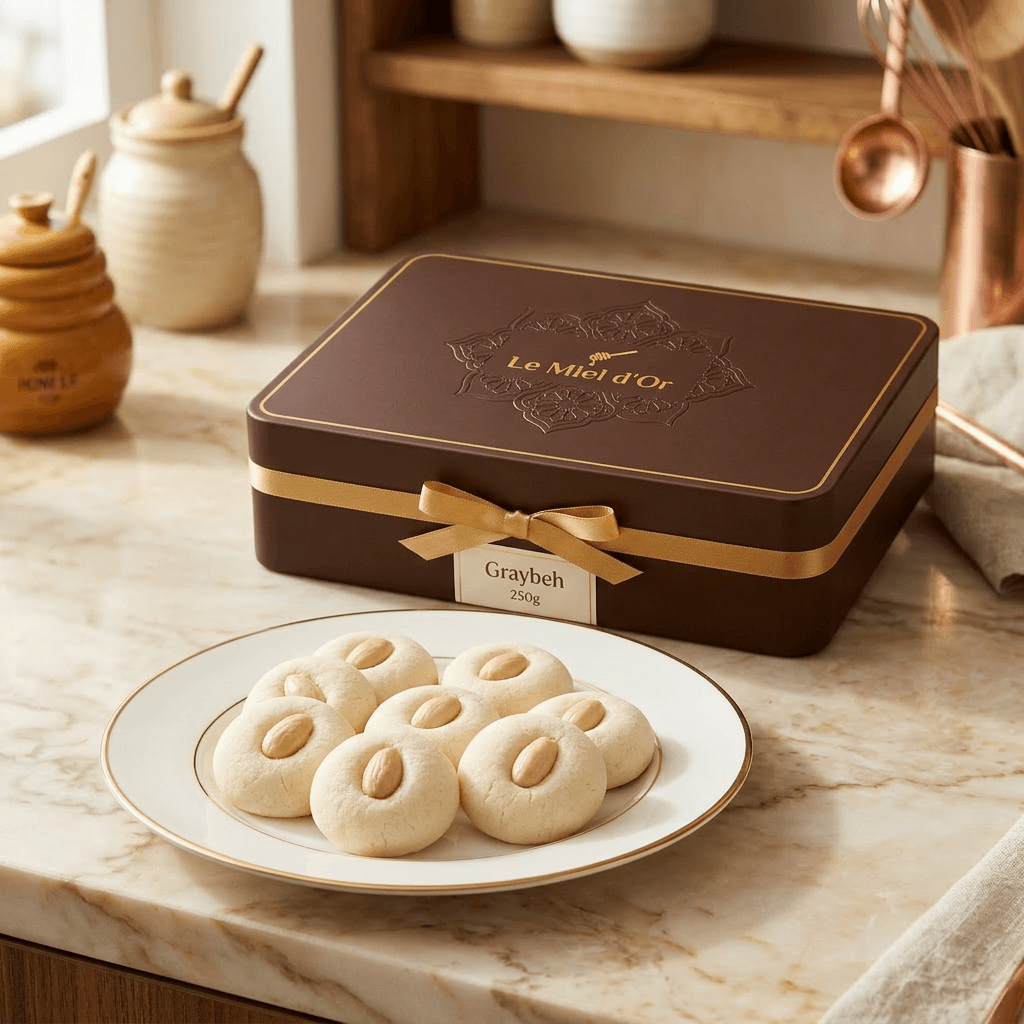
- Ghraybeh — the melting clarified-butter shortbread, barely sweet, plays creamy neutrality;
- Walnut maamoul — its lightly sweet, faintly bitter filling balances the tea's milky roundness;
- Roasted nuts — salted almonds and cashews create a much-loved sweet-salty counterpoint.
To avoid: syrup-drenched baklava, halva and very sweet confections — karak plus syrup flattens the flavours of both. Save those for bitter coffee. The golden rule of karak: the tea brings the sugar, the sweet brings the texture.
Which Pastries Match Moroccan and Algerian Mint Tea?
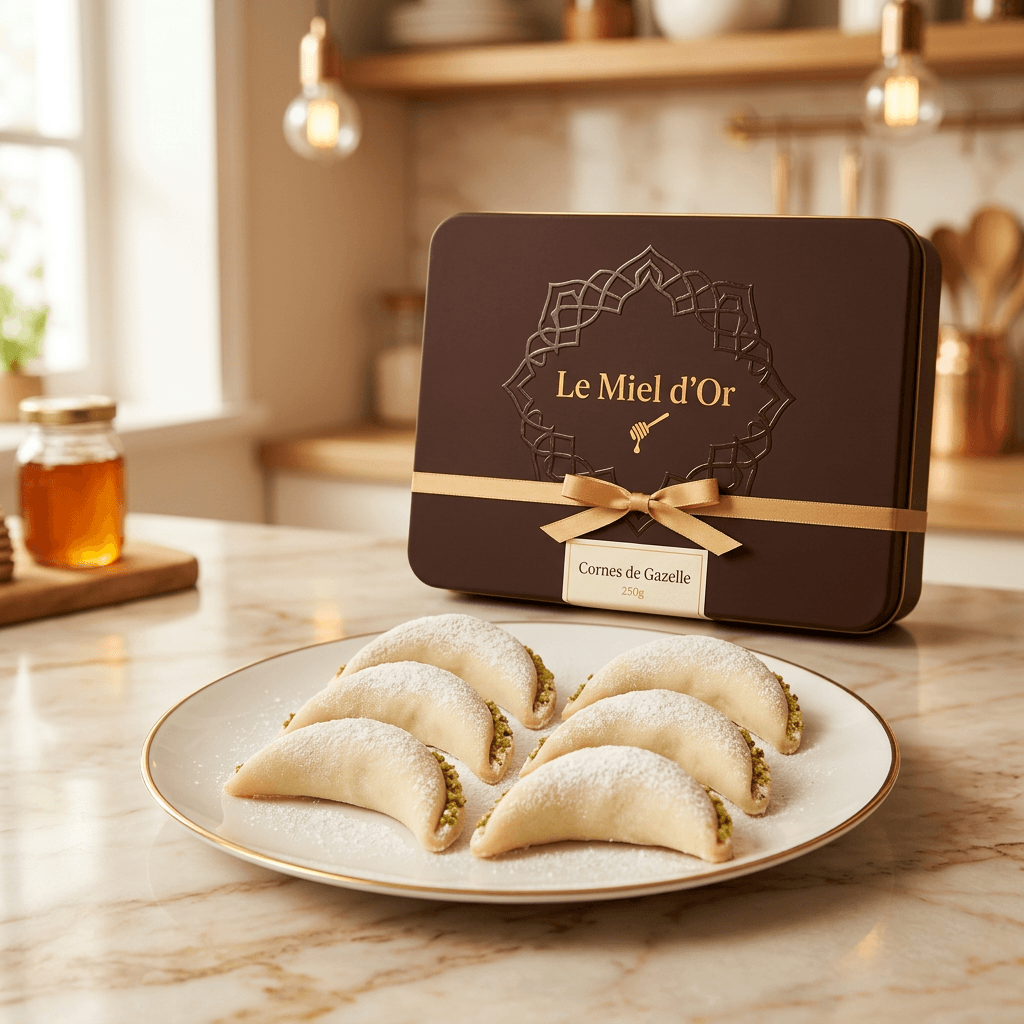
Mint tea calls for the almond pastries of the Maghreb — cornes de gazelle, makrout, ghriba — because its cool, mentholated freshness rinses the palate between each rich, nut-laden bite.
Brewed from gunpowder green tea, fresh mint (nanah) and unapologetic sugar, Maghrebi tea is poured from a height to raise its foam — the famous "crown." Unlike karak, its sweetness is bright and vegetal rather than milky: it cuts instead of coating. That cutting edge is what makes it the best ally of the Maghreb's dense pastries.
The classic trio:
- Cornes de gazelle — the slender crescent filled with orange-blossom almond paste is the canonical pairing: in Algeria as in Morocco, one is never served without the other;
- Makrout — the syrup-dipped semolina diamond filled with dates finds in mint tea the fresh acidity that lightens its richness;
- Almond ghriba — the crackled, dense, melting shortbread wakes up on contact with the hot tea.
The ritual has its own tempo: tea is served in three successive glasses, each steeped longer — "the first is gentle as life, the second strong as love, the third bitter as death," runs the proverb. Plan on two or three pastry pieces per guest to carry them through all three rounds. Cornes de gazelle, makroudh and almond ghriba are all in our Algerian selection.
Why Are Turkish Coffee and Baklava a Perfect Match?
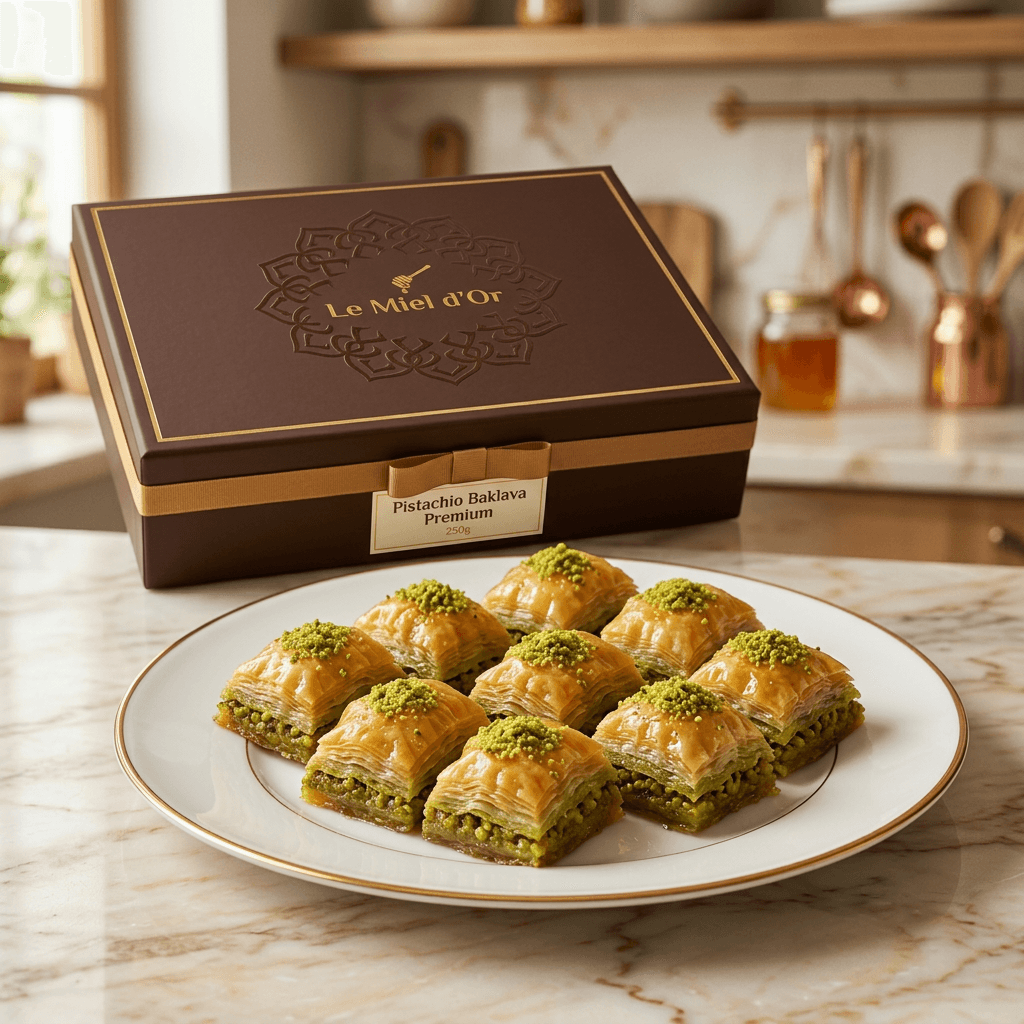
Turkish coffee and baklava complete each other because they are exact opposites: the coffee — thick, unfiltered, intensely bitter — cuts through the pastry's syrup and richness, while the baklava softens the coffee's astringency. Each resets the other.
Turkish coffee is ground finer than cocoa powder, brewed slowly in a copper cezve and served unfiltered, grounds and all, in small cups. It is sipped without milk, letting the sediment settle. Its dense bitterness and near-syrupy body make it the one drink that can stand up to syrup-soaked baklava without surrendering.
How to orchestrate the pairing:
- A sip of coffee before the first bite primes the palate;
- Then alternate: a bite of baklava, a sip of coffee — never both at once;
- One 40–60 g piece of baklava per cup is enough: this pairing is about intensity, not quantity;
- Pistachio baklava, more aromatic, holds its own against the coffee better than milder walnut versions.
The duo also works with long Levantine-style coffee and even a tight espresso. Avoid cappuccino and milky coffees, however: milk coats the palate and neutralises exactly the contrast that makes the pairing sing. A glass of cold water, served Turkish-style alongside the coffee, completes the ritual — one sip before the coffee clears the palate entirely.
How Do You Match Sweetness and Intensity? The Host's Cheat-Sheet
The universal pairing rule: the sweeter the treat, the more bitter and unadorned the drink should be; the more delicate the treat, the sweeter and milkier the drink can be. Everything else follows from this.
In practice, sort your sweets into three intensity families:
- Syrupy (baklava, syrup-dipped makrout, halva) → bitter drinks without milk or sugar: Turkish coffee, espresso, gahwa, plain black tea;
- Moderately sweet (maamoul, cornes de gazelle, stuffed dates) → aromatic, lightly sweetened drinks: mint tea, saffron gahwa, cardamom tea;
- Barely sweet (ghraybeh, barazek, roasted nuts) → rich, milky drinks: karak, chai latte, café au lait.
The UAE hosting cheat-sheet:
- Open with gahwa and dates — the traditional welcome, served the moment guests arrive;
- Continue with the main platter: mint tea or karak, depending on your dominant sweets;
- Close with Turkish coffee and baklava for the connoisseurs, late in the evening;
- Allow 150–200 g of sweets per person across the whole gathering, always including one low-sugar option;
- Keep cold water flowing throughout — essential in the Gulf climate.
With these benchmarks, an assorted platter and two teapots, your majlis is ready to host by the book.
Frequently Asked Questions
What do you traditionally serve with Arabic coffee?
Arabic coffee (gahwa) is traditionally served with dates — Sukkari, Khalas or Ajwa — whose sweetness balances the bitterness of the unsweetened, cardamom-spiced brew. On grander occasions, hosts add almond-stuffed dates, maamoul or fine chocolates. The custom is to eat the date just before sipping the coffee, so the sweetness carries into the sip.
Is it rude to refuse gahwa in the UAE?
Declining the first cup of gahwa can be read as rejecting hospitality — it is better to accept at least one cup, even if you do not finish it. To politely signal you want no refill, gently shake the empty cup with a flick of the wrist as you hand it back. Always receive and return the cup with your right hand.
What sweets go well with karak?
Because karak is already sweet and milky, choose lightly sweetened, crunchy treats: sesame barazek, buttery ghraybeh, walnut maamoul or lightly salted roasted nuts. Avoid syrup-soaked baklava and halva, whose sugar stacks on top of the tea's and overwhelms the palate. The tea supplies the sweetness; the snack should supply texture and contrast.
What coffee goes best with baklava?
Turkish coffee is the classic match: thick, unfiltered and intensely bitter, it cuts straight through baklava's syrup and richness. A tight espresso or strong Arabic coffee also works well. Avoid milky coffees like cappuccino or latte: the milk coats the palate and cancels the bitter-sweet contrast that makes the pairing work.
How many sweets should you plan per guest for a majlis?
Plan on 150–200 g of sweets per person for a two-to-three-hour gathering — roughly 4 to 6 assorted pieces: two or three dates on arrival with gahwa, then two or three pastries with tea. Always include a low-sugar option such as ghraybeh or roasted nuts, and keep cold water available throughout.